Louisville Puts Factory-Built and Site-Built Homes on the Same Streets
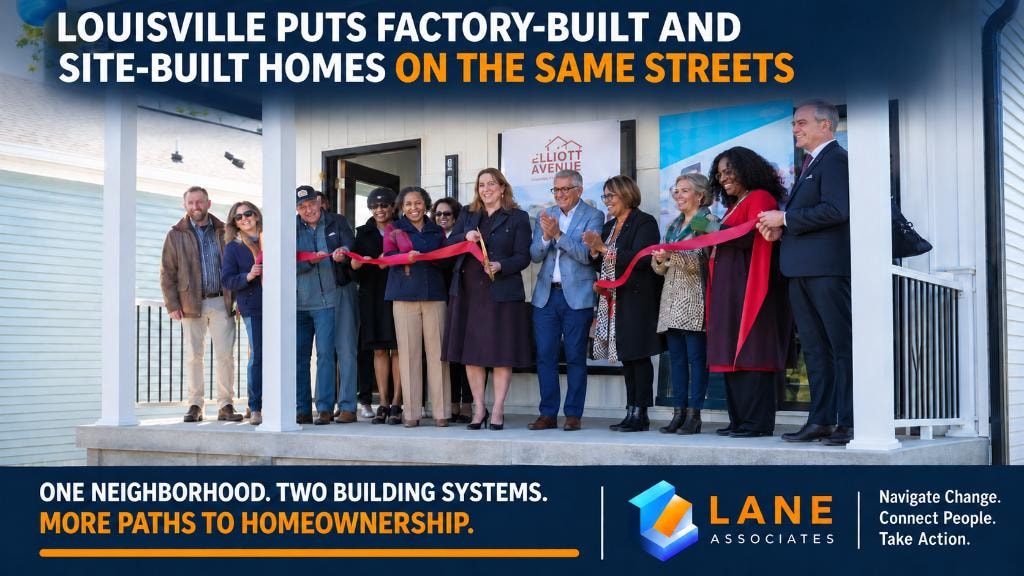
A ribbon-cutting on Elliott Avenue in Louisville, Kentucky is more than a neighborhood milestone. It is proof that factory-built and site-built homes can share the same streets, serve the same communities, and expand the same paths to homeownership, when the will to make it happen exists.
Louisville Puts Factory-Built and Site-Built Homes on the Same Streets
By Chris "Lane" Nicely | November 18, 2026
One neighborhood. Two building systems. More paths to homeownership.
That is the story being written on Elliott Avenue in Louisville, Kentucky — and it is a story the manufactured housing industry should be telling loudly, repeatedly, and everywhere it can.
What Happened on Elliott Avenue
A ribbon-cutting ceremony on a residential street in Louisville may not sound like a national housing story. But what it represents is exactly that.
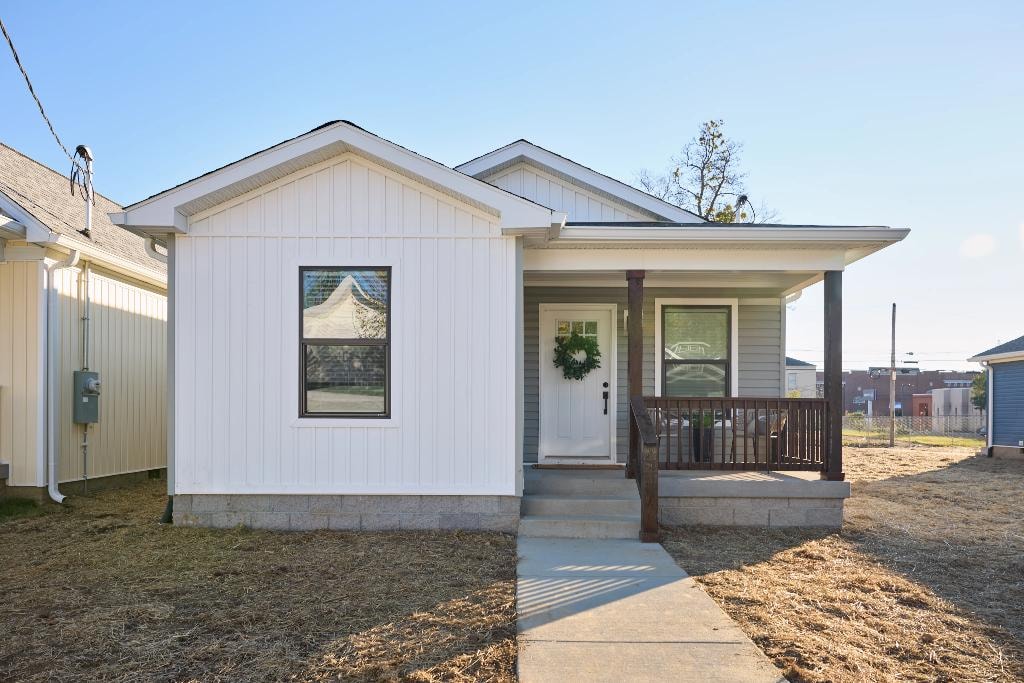
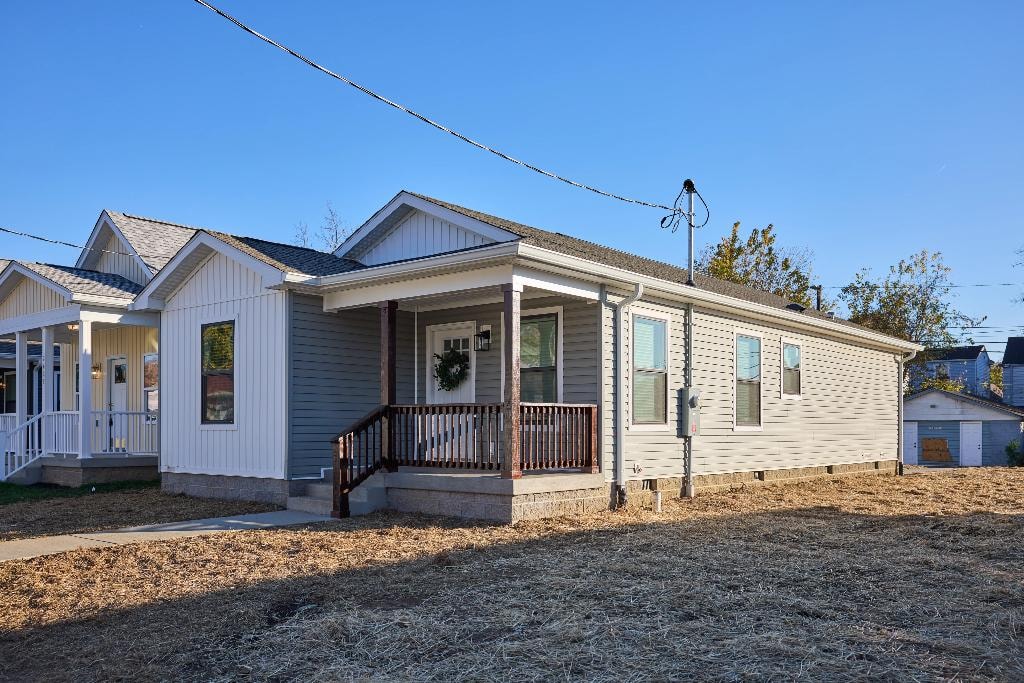
The Elliott Avenue project placed factory-built and site-built homes side by side in the same neighborhood — same streets, same community, same standard of quality. The homes are indistinguishable to the eye. They serve the same buyers. They contribute to the same neighborhood fabric. And they demonstrate, in the most concrete way possible, that the old argument about factory-built homes not belonging in established neighborhoods is not just wrong — it is obsolete.
The crowd gathered for that ribbon-cutting included local officials, community leaders, housing advocates, and residents. They were not there to celebrate a compromise. They were there to celebrate a solution.
Why This Matters Beyond Louisville
The manufactured housing industry has spent decades fighting a perception problem. The stigma attached to factory-built homes — rooted in outdated images, exclusionary zoning, and a financing system that treated manufactured homes as second-class assets — has limited the industry's reach, constrained its growth, and denied millions of Americans access to an attainable path to homeownership.
Louisville's Elliott Avenue project is a direct challenge to every piece of that narrative.
When factory-built and site-built homes share the same block, the argument that manufactured homes diminish property values collapses. When local officials show up to cut the ribbon, the argument that manufactured housing lacks political support loses its footing. When buyers choose factory-built homes in established neighborhoods because they want to — not because they have no other option — the argument that manufactured housing is a last resort rather than a first choice begins to fade.
This is what progress looks like. Not a policy paper. Not a conference panel. A neighborhood.
The Role of Community Development Partners
Projects like Elliott Avenue do not happen by accident. They require community development organizations willing to challenge conventional assumptions about what belongs where. They require local governments willing to update zoning codes and land-use policies that have historically excluded factory-built homes from established neighborhoods. They require lenders willing to finance these homes on terms that reflect their actual quality and durability. And they require builders and manufacturers willing to produce homes that meet the design expectations of the communities they enter.
The Elliott Avenue project succeeded because partners across all of these categories showed up and did the work. That coalition — community development, local government, finance, and manufacturing — is the model for replication.
The manufactured housing industry cannot wait for communities to come to it. It has to go to communities, build the relationships, demonstrate the product, and make the case that factory-built homes belong everywhere that site-built homes belong.
Louisville just made that case better than any industry white paper ever could.
Two Building Systems, One Goal
There is a temptation in the manufactured housing industry to frame the relationship between factory-built and site-built construction as competitive. It is not. The housing shortage in the United States is not a problem that either building system can solve alone. It is a problem that requires both.
Site-built construction has scale, financing infrastructure, and decades of consumer familiarity. Factory-built construction has speed, cost efficiency, quality control, and the ability to produce homes at price points that site-built construction simply cannot match at scale.
When these two systems work together — on the same streets, in the same neighborhoods, toward the same goal of expanding homeownership — the result is more homes, more choices, and more Americans with a real path to ownership.
That is what Elliott Avenue represents. Not a competition. A collaboration.
What the Industry Should Do Next
Louisville's example is replicable. The conditions that made it possible — willing partners, supportive local government, a community development framework, and a commitment to quality — exist in cities and towns across the country. The industry's job is to find those conditions, build those partnerships, and execute.
Specifically, the manufactured housing industry should be:
-
Identifying community development organizations in target markets that are already working on neighborhood revitalization and affordable homeownership, and positioning factory-built construction as a tool in their toolkit.
-
Engaging local governments on zoning reform, not just at the state level but at the municipal level, where the decisions that actually determine where homes can be placed are made.
-
Documenting and publicizing projects like Elliott Avenue so that skeptical officials, lenders, and community members can see the evidence with their own eyes. One successful project, well-documented and widely shared, is worth more than a hundred industry presentations.
-
Investing in design that meets the expectations of established neighborhoods. The homes on Elliott Avenue belong there because they were designed to belong there. That is not an accident. It is a choice the industry can make in every market it enters.
-
Building the financing infrastructure that allows buyers in these neighborhoods to access the same loan products, on the same terms, as buyers of site-built homes. Without financing parity, design parity is not enough.
The Bottom Line
A ribbon-cutting on Elliott Avenue in Louisville is a moment worth celebrating. But it is also a challenge — to the industry, to policymakers, to community development organizations, and to every stakeholder who believes that factory-built housing has a role to play in solving the American housing shortage.
The challenge is this: do it again. And again. And again.
One neighborhood at a time, factory-built and site-built homes can share the same streets. Louisville just showed us how.
Chris "Lane" Nicely is President & CEO of LANE Associates, a national housing consultancy specializing in manufactured and factory-built housing. He has more than 30 years of experience connecting people, inspiring ideas, and advancing housing solutions across the country.
Explore Topics
Written by
Chris "Lane" Nicely
Content creator and writer sharing insights and stories.